

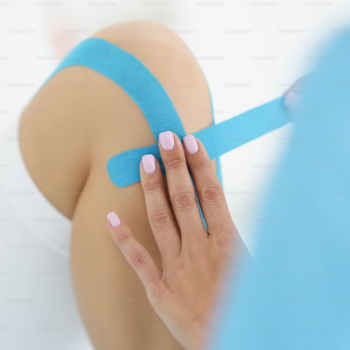
Kinesiology Taping vs Traditional Strapping
People often ask whether kinesiology taping is better than traditional strapping. The truth is, they’re just different tools used for different situations.
Traditional strapping is rigid and designed to restrict movement. It’s often used in the early stages of an injury when stability is the priority. For example, if you’ve rolled an ankle badly, firm strapping can help protect the joint and prevent further damage.
Kinesiology taping does the opposite. It supports movement rather than stopping it. It’s flexible, lightweight, and comfortable to wear for several days. This makes it ideal for ongoing pain, muscle tension, postural issues, and returning to activity after injury.
Traditional strapping
Traditional strapping is usually short term and often removed after a session or event. Kinesiology tape is designed to stay on and keep working in the background.
In sports massage, I often use kinesiology taping once the acute phase of an injury has passed. It works well when someone wants to stay active, improve movement, or manage pain without feeling restricted.
Using both
Sometimes both methods are useful at different stages of recovery. Early on, more support might be needed. Later, kinesiology taping helps guide movement and support healing.
If you’re unsure which one is right for you, that’s something we can talk through during your appointment. The goal is always to support your body in the most appropriate way for where you’re at right now.
Book online at www.astralfitness.co.uk
Thank you for reading this weeks blog, Kinesiology Taping vs Traditional Strapping.
Thanks for reading,
Chloe